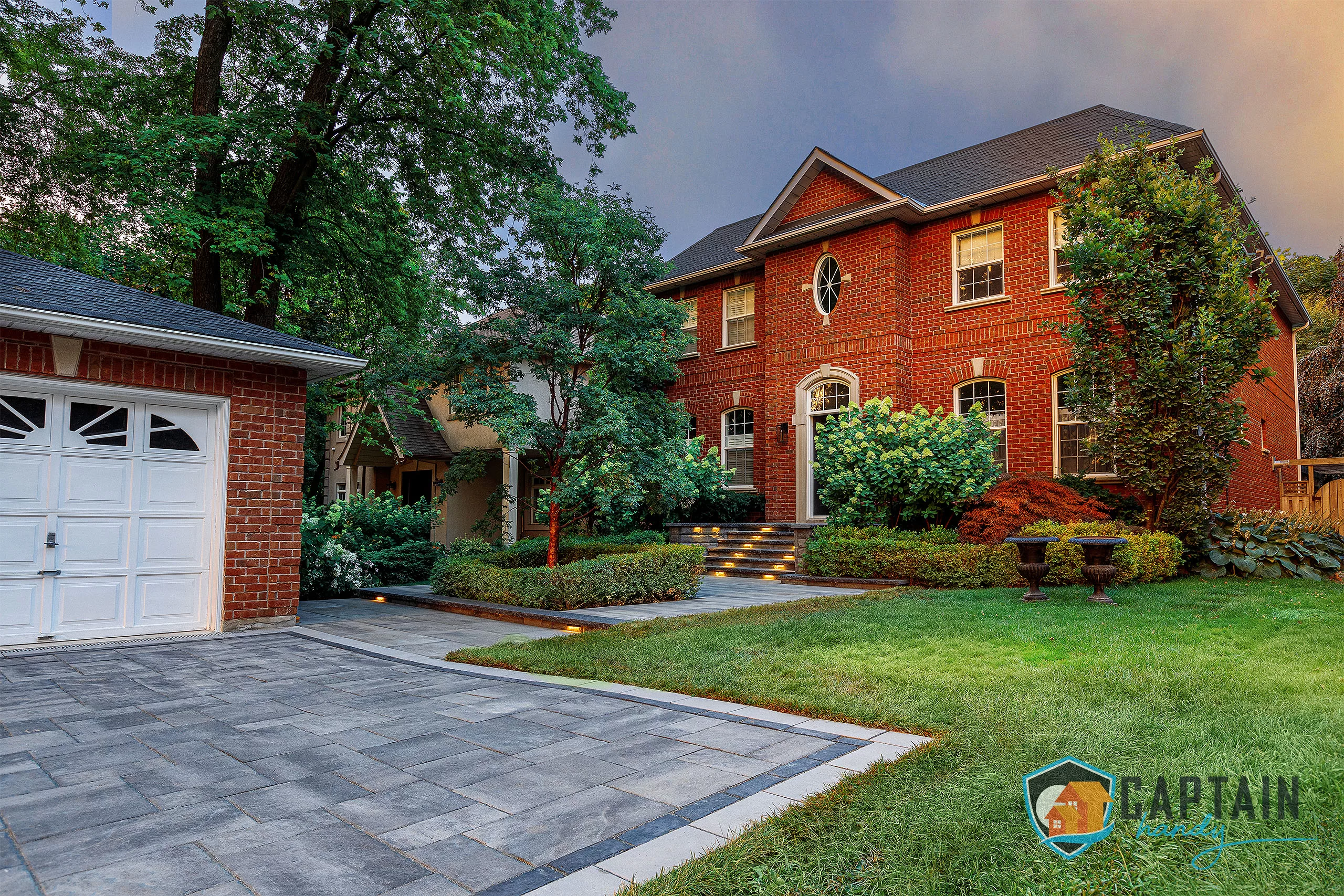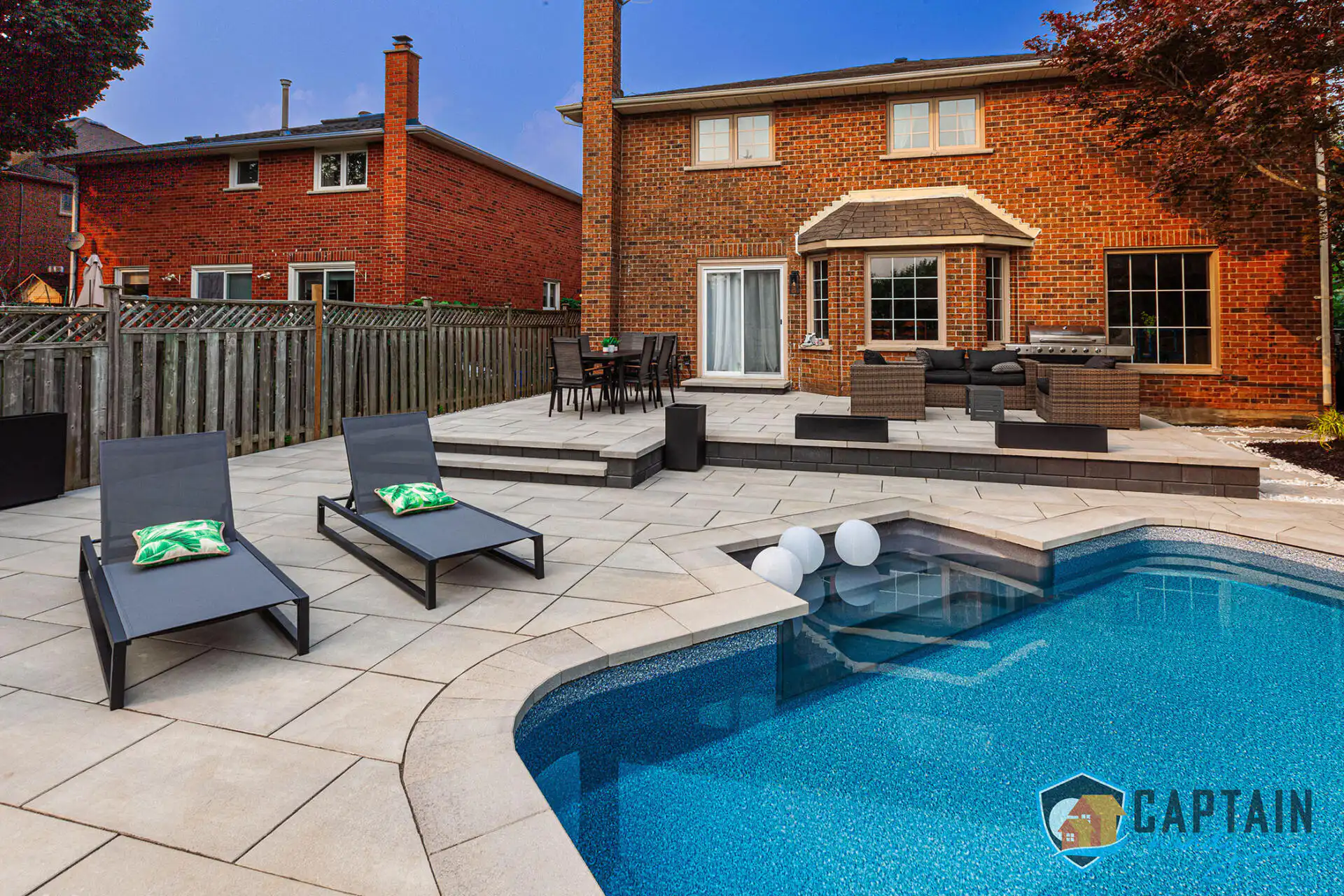




Out here in King Township, patio building in Schomberg means something a little different than it does twenty minutes south in the city. There’s no fence three feet from your neighbour’s window, no laneway squeeze to plan around. Instead you’re often looking at acreage, a long gravel driveway, maybe a barn or a paddock somewhere in the sightline, and a house with a footprint that was built for farm life, not a subdivision. That kind of property calls for a completely different approach to patio design, and Captain Handy has built enough of them across King Township to know exactly how a rural lot behaves differently from a city one. Patio construction on a property like this starts by understanding what’s already on site, not by assuming it’s just a bigger version of a city job. Take a look at completed projects and request a free estimate at captainhandy.ca.
Materials That Actually Hold Up on a Rural Property
Material choice on a Schomberg property usually comes down to two things: how it looks against a farmhouse or country-home exterior, and how it performs with zero downtown infrastructure backing it up. No municipal storm sewer to lean on, no city crew to call if drainage backs up, so getting the base right the first time matters even more out here. That’s the kind of patio construction discipline that separates a patio contractor who’s built here before from one learning rural site conditions on your job.
Interlock Patio
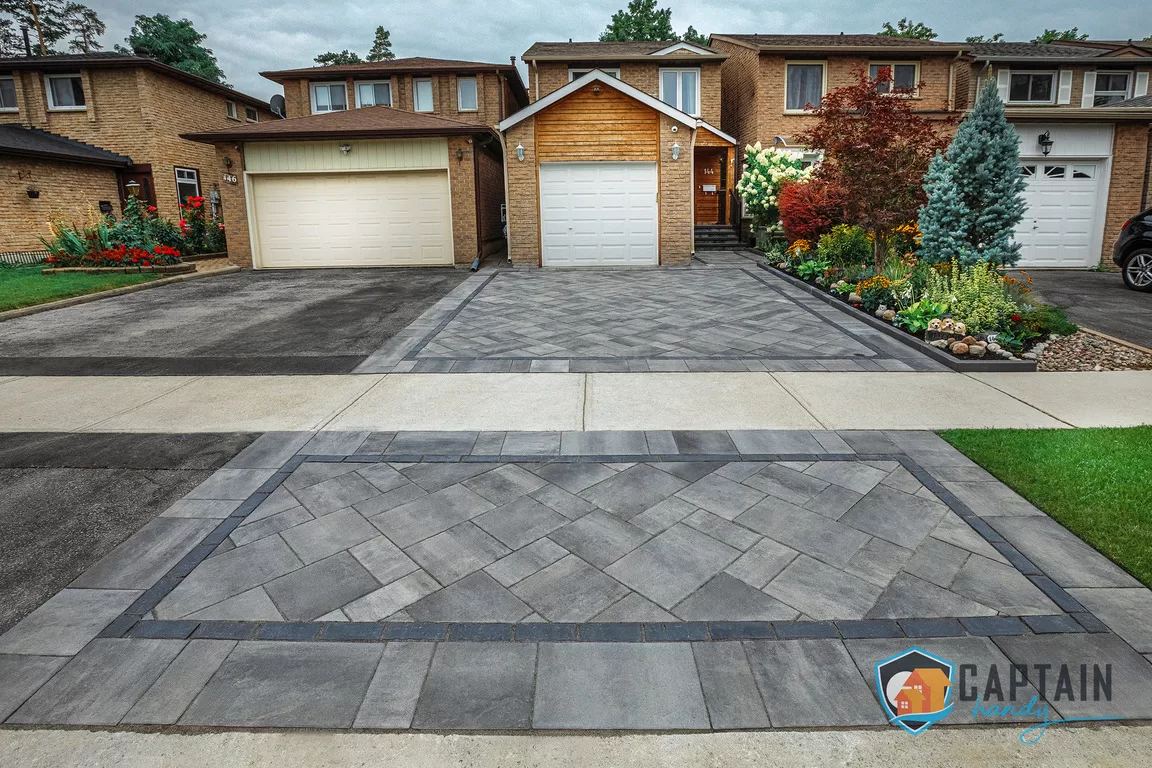
An interlock patio remains the most practical choice for most Schomberg properties we quote. Interlocking pavers handle Ontario’s freeze-thaw cycles well, and because King Township sees more open exposure to wind and snow drift than a sheltered city yard, a properly compacted gravel base matters even more here than it does downtown. If a section ever settles, we can lift and reset individual pavers without disturbing the rest of the patio installation, which is a real advantage on a property where getting a crew back out for a repair means a longer drive, not a quick trip across town. An interlock patio installation done right the first time also matters more out here, since patio construction crews aren’t just around the corner if something needs adjusting next spring.
Paver Patio
A paver patio in a larger-format concrete or porcelain unit gives a cleaner, more architectural look for the newer country-style builds going up around Schomberg, the kind with wraparound porches and black-framed windows rather than a century-old farmhouse silhouette. We lay these in running bond or stack patterns depending on the home’s overall style, and porcelain in particular resists staining from dropped leaves, tannin, or the general debris that comes with being surrounded by open farmland rather than a manicured urban lawn.
Flagstone Patio
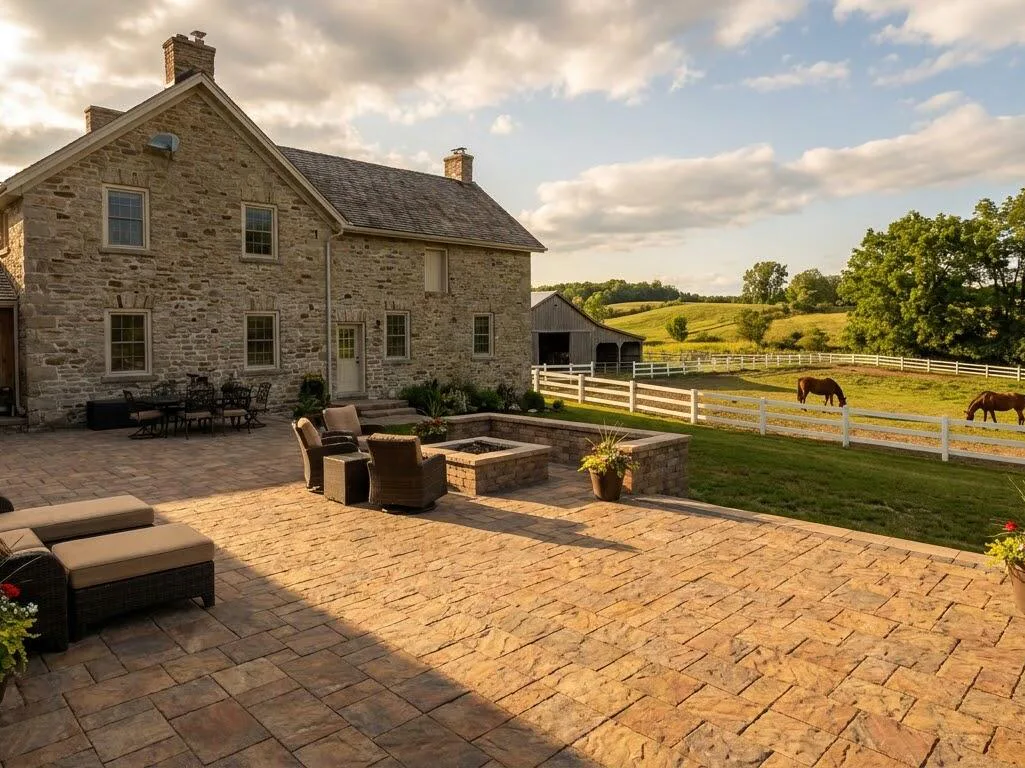
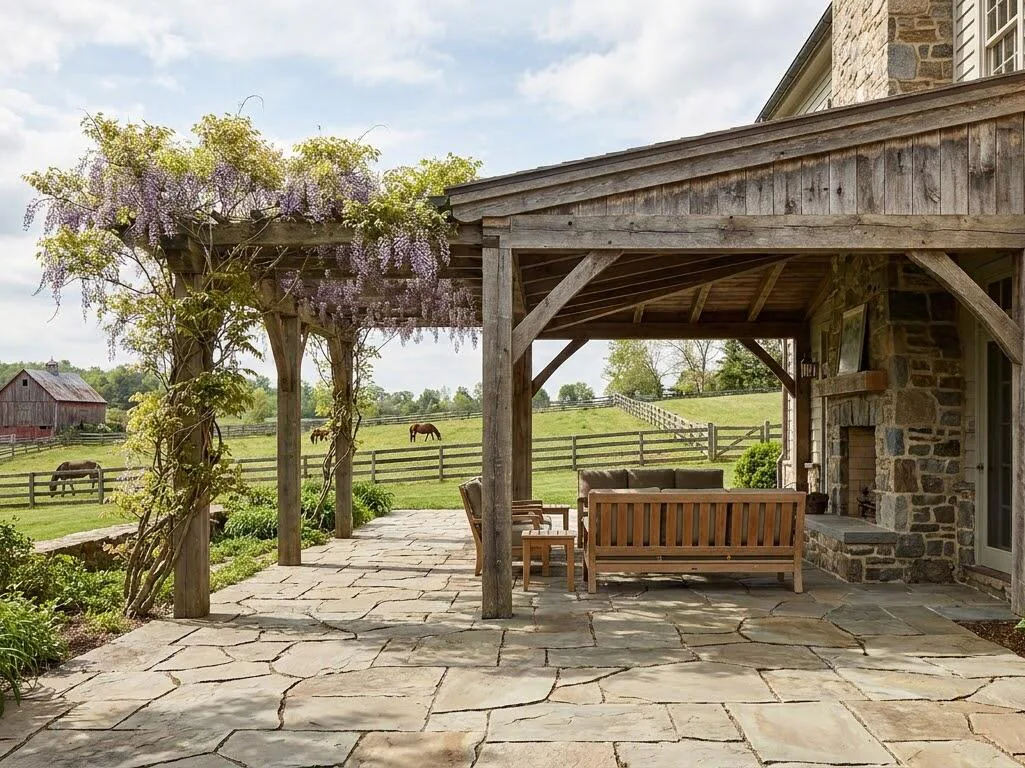
A flagstone patio suits Schomberg’s older farmhouse and country-home properties especially well. Irregular natural stone laid in a dry-set gravel base reads as though it grew out of the property rather than being trucked in, which matters on a lot where the house itself might be a hundred years old and surrounded by mature trees, an old orchard, or a stone fence line that’s been there just as long. We source stone tones that complement fieldstone foundations and barn-board siding, so the patio doesn’t look like a suburban import dropped onto a country lot. A flagstone patio remains one of the most requested finishes for these older country properties, and it’s easy to see why once you see it set against original fieldstone.
Natural Stone and Concrete Patio
Beyond flagstone, a natural stone patio in granite or limestone works well around pool areas on the larger equestrian and hobby-farm properties in the area, where slip resistance matters as much as looks. A concrete patio, whether plain, broom-finished, or a stamped concrete patio designed to mimic natural stone at a lower material cost, is still a solid choice for a functional space near a workshop, a barn, or a secondary structure where the full stone budget doesn’t make sense. Patio cost differs meaningfully between these options, and we walk every client through that comparison before committing to a material. A natural stone patio in particular tends to be the finish clients choose once they’ve seen it against a fieldstone foundation in person rather than just in a sample photo.
Designing Around Barns, Paddocks, and Long Sightlines
Custom patio design on a Schomberg property starts from a completely different set of questions than it would in the city. Instead of “how do we make this small space feel bigger,” it’s usually “how do we frame the view of the paddock without the patio feeling disconnected from the house.” A lot of these properties have a genuinely spectacular sightline, rolling farmland, a horse paddock, maybe a pond in the distance, and a well-designed patio treats that view as the centrepiece rather than competing with it. Custom patio design out here is really about restraint, knowing when not to build something, as much as it is about the finished layout.
3d patio design becomes especially useful here because these properties are large enough that a homeowner genuinely can’t picture how a patio positioned near the barn versus one closer to the house will actually feel until they see it rendered against real sightlines. Custom patio builders who only work from a flat sketch tend to undersell how much a rural property’s open space can do for a finished patio. We also plan patios to work alongside long driveways and equipment access, since a lot of these properties need room for a truck or trailer to pass without driving straight across a finished paver patio. Custom patio builders who haven’t worked rural properties before often miss this kind of access planning entirely, and it’s one of the first things we walk every Schomberg client through. A homeowner searching patio builders near me from a King Township address is usually trying to avoid exactly that kind of oversight.
Covered and Raised Patios
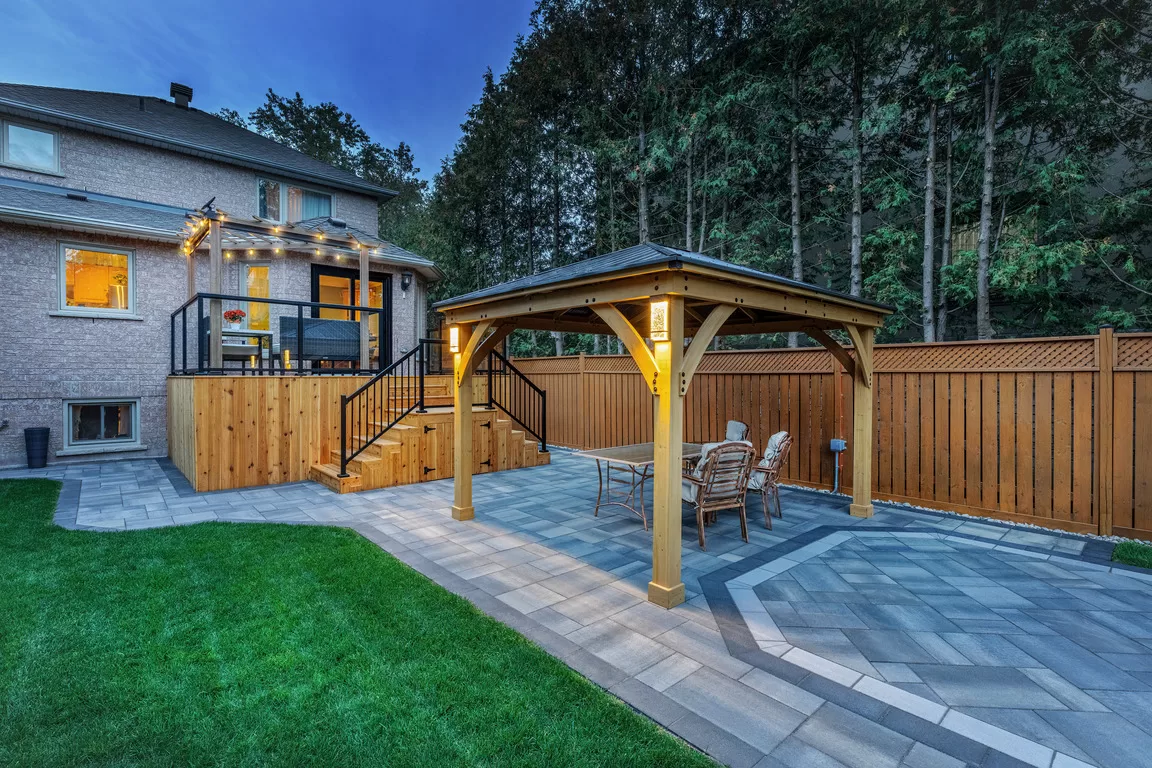
A covered patio does a lot of work on an exposed rural lot where there’s no row of neighbouring houses blocking wind and weather the way there is downtown. We build these anywhere from a simple attached roof to a full pergola structure, which you can see examples of at captainhandy.ca/pergolas-shade-structures.html. A covered patio pairs especially well with a fire pit area on these properties, giving you a dry, wind-sheltered spot even when the weather off the open fields turns. On properties with any grade change, and a surprising number of King Township lots roll more than they look like they do from the road, a raised patio creates a level outdoor room and usually comes with a retaining wall and patio steps built into the transition down toward the lawn or paddock. We’ll often walk clients through a 3d patio design rendering of a raised patio option before committing to a grade change, since a retaining wall is expensive to redo once it’s built. Patio steps down from a raised section to the lawn also double as informal extra seating when the whole family’s out for a summer gathering.
Fire Pits, Outdoor Kitchens, and Pool Patios
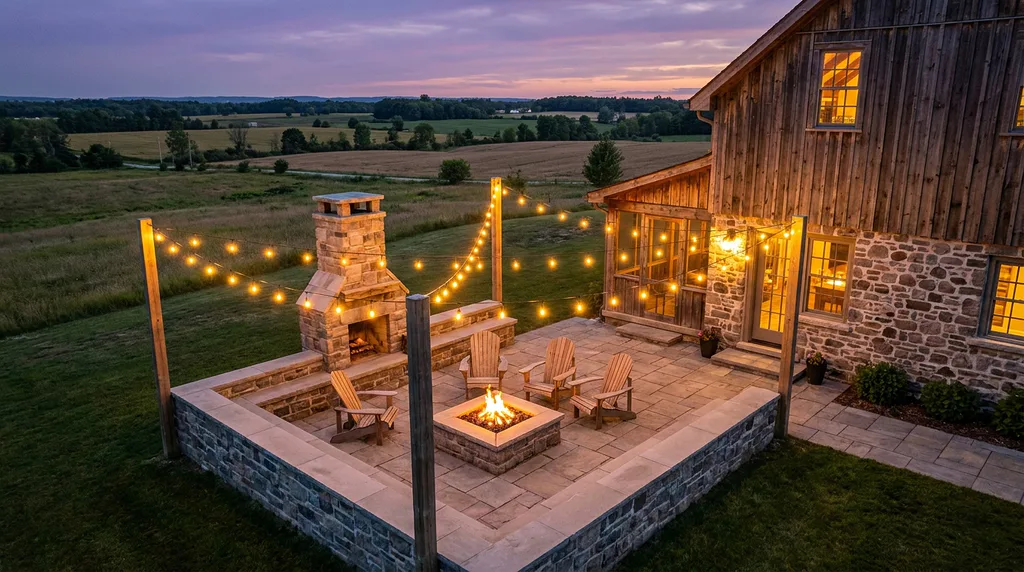
A patio with fire pit is close to standard on the properties we build out here, and it makes sense given how much more sky and open air a rural backyard has compared to a city one. Whether it’s a gas line or a proper wood-burning pit depends on preference and how close the nearest structure sits, something we plan around barns and outbuildings just as carefully as we would a house. An outdoor kitchen patio comes up often too, particularly for property owners who host large family gatherings that a standard suburban backyard simply couldn’t handle, built-in grill, prep counter, sometimes a smoker, positioned to take advantage of the open space rather than being squeezed into a corner. Pairing a patio with fire pit alongside an outdoor kitchen patio is a common combination for property owners who host large gatherings a few times a year.
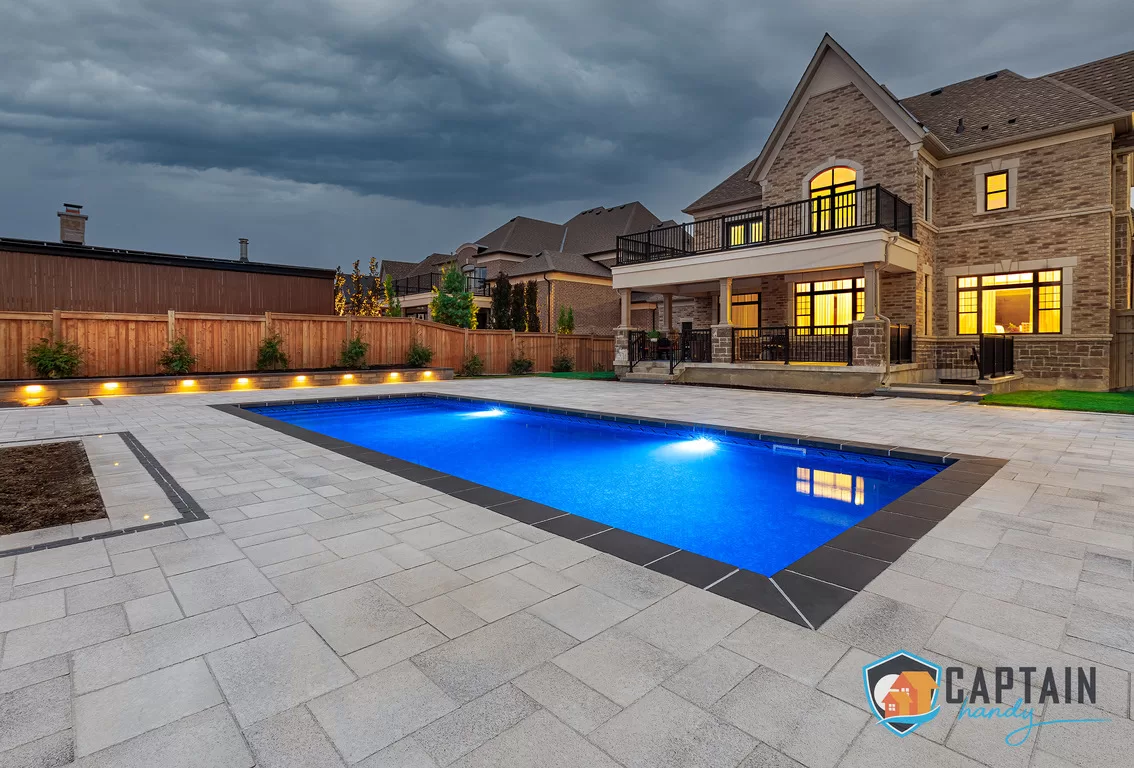
For the handful of properties we’ve built pool patios around in the area, a pool patio needs a slip-resistant surface that stays cool underfoot, and on a rural lot that also usually means planning the surrounding hardscape so pool equipment and any well or septic access points stay clear and serviceable. Patio lighting matters just as much here, arguably more, since there’s no streetlight two doors down filling in the gaps after dark. We typically run low-voltage LED fixtures along patio steps and garden beds so the whole space stays usable well past sunset, which out here can mean genuinely dark, star-visible nights rather than the ambient glow of a city sky. We wire patio lighting on its own switch so it’s usable independent of the main house circuit, which matters when the nearest breaker panel might be a longer walk than it would be in a city bungalow.
Well Water, Septic, and What’s Actually Underground
This is the part of patio building in Schomberg that a city-based patio contractor usually hasn’t dealt with before: most of these properties run on well water and septic rather than municipal service, and that changes where a patio can actually go. A septic bed or leach field needs clearance from any hardscaping, and building a patio installation on top of or too close to one isn’t just a design mistake, it can mean an expensive septic repair down the road. We map utilities, well lines, and septic fields before finalizing any patio design, which is a step a lot of city crews unfamiliar with rural properties simply skip because they’ve never had to think about it.
Patio Renovation on Older Country Properties
A fair amount of our work in Schomberg is patio renovation rather than new construction. Older farmhouse properties often have a concrete pad or an aging patch of interlock installed decades ago, sometimes by a previous owner, sometimes as a DIY project that’s settled unevenly over the years. We assess whether the existing base can be reused, and out here that’s actually more likely than in the city since these lots tend to have better natural drainage to begin with, gravity does more of the work when you’re not hemmed in by fences and a neighbour’s grading. Where the base has failed, usually from freeze-thaw heaving over a couple of decades, we rebuild it properly rather than patching over the same problem. Even a simple backyard patio refresh on one of these older properties usually turns into a bigger conversation once we’re actually assessing what’s underneath.
Permits for Patio Building in Schomberg
King Township generally doesn’t require a patio permit for a simple at-grade backyard patio, but that changes once you add a roof structure, a retaining wall past a certain height, or any work near a well, septic system, or protected agricultural land. Properties zoned for agricultural or equestrian use sometimes carry additional restrictions worth checking before finalizing a design. Getting the patio permit question sorted early protects your project timeline, especially out here where a stop-work order means a longer wait for a township inspector to make the drive out and sign off. Captain Handy handles this research on every project, so you’re not the one tracking down which department covers rural zoning questions. Skipping the patio permit conversation on agricultural-zoned land is the kind of mistake that can stall a project for weeks while zoning gets clarified.
What Patio Building in Schomberg Costs
Patio cost on a rural property depends heavily on site access, distance from the road, and how much material handling is involved once a truck reaches the property. A long gravel driveway can actually make delivery easier than a tight downtown side gate, which sometimes offsets the extra distance crews have to travel. Here’s how we generally break the categories down for Schomberg projects — these are starting points, not fixed prices, since every property is different:
- Poured concrete patio: our most budget-friendly option, priced by square footage and finish
- Interlock or paver patio: a mid-range investment that moves with pattern complexity and material grade
- Stamped concrete patio: priced between plain concrete and full stone, depending on the pattern and finish
- Flagstone or natural stone patio: our premium finish, priced by stone type, thickness, and how it’s sourced
- Patio with fire pit add-on: priced separately depending on a gas line run or a wood-burning build
- Patio lighting package: priced by fixture count and how many zones you want wired
- Covered patio or outdoor kitchen patio additions: quoted individually based on scope
Cost to build a patio on a typical Schomberg acreage varies more than on a standard city lot, mostly because the footprint tends to run larger and site access can go either way depending on the property. Our custom patio builders give you an itemized quote broken down by material and labour before any work starts, so the cost to build a patio never comes as a surprise partway through. If you’ve been searching patio builders near me without much luck finding a crew familiar with rural sites, that kind of itemized clarity is exactly what to expect from us. Call +1 (647) 830-4834 or email [email protected], or fill out the form at captainhandy.ca/contact.html to book a site visit.
Why Schomberg Homeowners Choose Captain Handy
We’re licensed, insured, and WSIB compliant, and the same crew that walks your property for the initial quote is the crew that shows up to build it, no subcontractors swapped in partway through once the deposit clears. Every patio contractor on our team is a full-time Captain Handy employee, which matters on a rural property where a crew might be on site for a full day at a stretch rather than popping in and out like they would on a tight city lot. One point of contact, one contract, and a team that treats a working farm property or a quiet country home with the same care as anywhere else. That’s what patio building in Schomberg looks like when it’s done by a crew who actually understands rural properties instead of applying a city template. Every larger project still starts with a proper 3d patio design walkthrough, rural acreage or not. See what past clients across the region have said about working with us on Google, where we’ve built a strong record across hundreds of completed projects.
We also work across Toronto, North York, Scarborough, Etobicoke, Vaughan, Markham, Richmond Hill, Mississauga, Brampton, Oakville, Thornhill, Aurora, Newmarket, King City, Caledon, Milton, Burlington, Whitchurch-Stouffville, Pickering, Ajax, and Oshawa, but patio building in Schomberg gets its own approach: rural utility mapping, driveway and equipment access planning, and material choices that suit a country property rather than a suburban one. If you’ve searched patio builders near me from a King Township address and mostly found city-based patio builders unfamiliar with well and septic considerations, that gap is exactly what we’ve built our process to close.
Whether you’re picturing a simple backyard patio off the kitchen with a view of the paddock, a full outdoor kitchen build for hosting extended family, or a patio renovation on a property you’ve owned for decades, it starts the same way: a site visit, an honest conversation, and a custom patio design that actually fits a rural lot. No matter the property type, patio building in Schomberg always starts with understanding the land before drawing a single line. Start at captainhandy.ca or visit captainhandy.ca/pergolas-shade-structures.html to see related outdoor structure work and request a free quote.

How much does it cost to build a patio in Schomberg?
Patio cost depends heavily on the project – material choice, square footage, site access, and base preparation all move the number independently. Poured concrete sits at the budget end, interlock and paver patios land in the middle, and natural stone or flagstone run at the premium end. Captain Handy recommends a site visit since driveway length and access vary so much property to property.
Do I need a permit to build a patio in Schomberg?
A simple at-grade patio usually doesn’t require a permit from King Township, but a roof structure, a taller retaining wall, or work near a well or septic system typically does trigger a review. Captain Handy checks your property against township bylaws and any agricultural zoning restrictions before quoting.
What’s the best patio material for a rural property in winter?
Interlocking pavers generally handle open, wind-exposed rural lots better than poured concrete because individual pavers shift slightly instead of cracking under freeze-thaw pressure. Captain Handy builds every base to local frost-depth standards regardless of material, which matters even more on properties without the shelter of neighbouring homes.
What’s the difference between a patio and a deck?
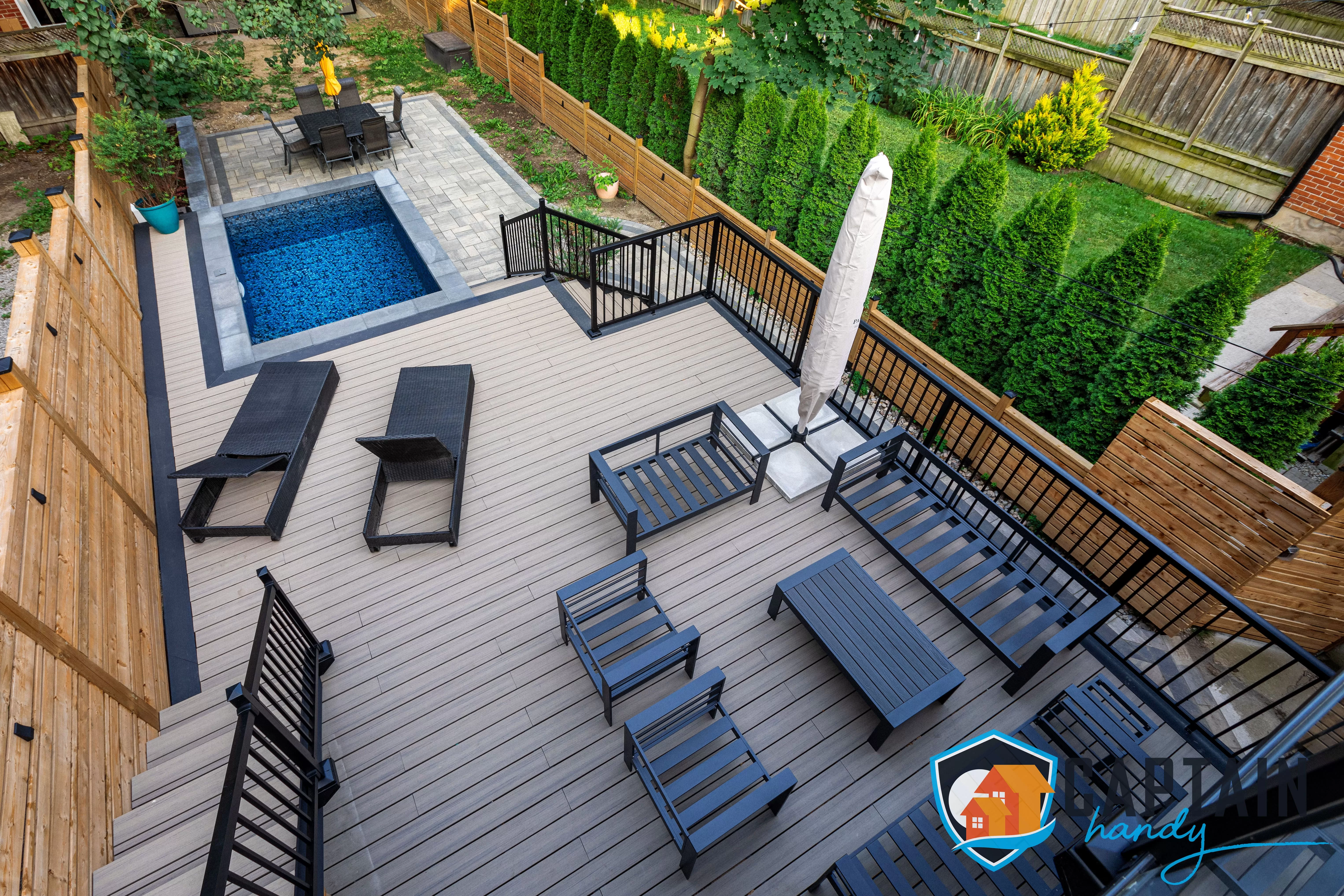
A patio is a ground-level surface built from stone, concrete, or pavers, while a deck is an elevated wood or composite structure typically attached at door height. On a sloped Schomberg property, a deck stepping down into a lower patio near a paddock or garden is a common combination.
How long does it take to build a patio?
A standard interlock or concrete patio typically takes one to two weeks from excavation to completion, while larger rural projects involving retaining walls, fire features, or long material hauls from the road can take three to five weeks. Captain Handy provides a written timeline with every quote so you know what to expect before work begins.