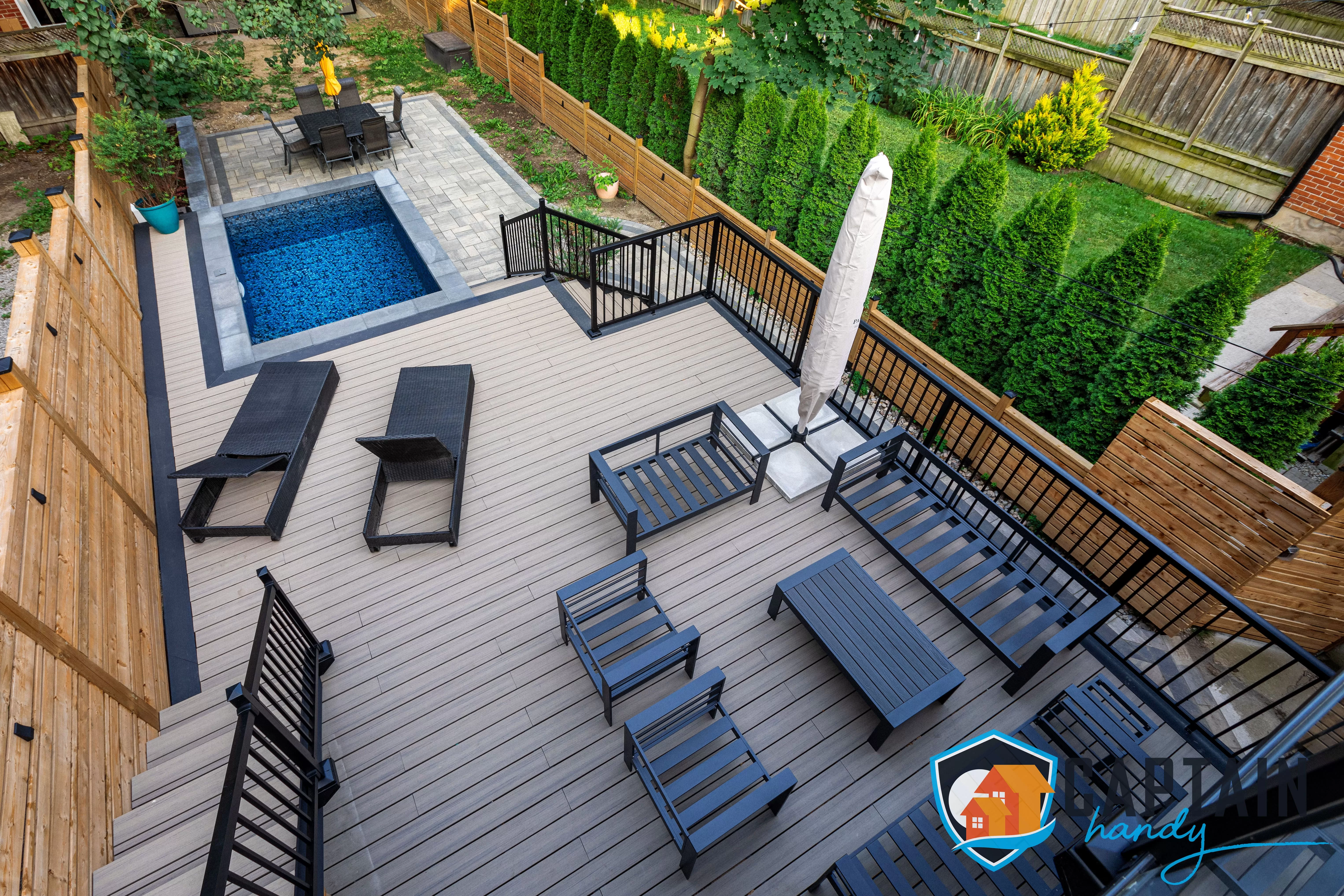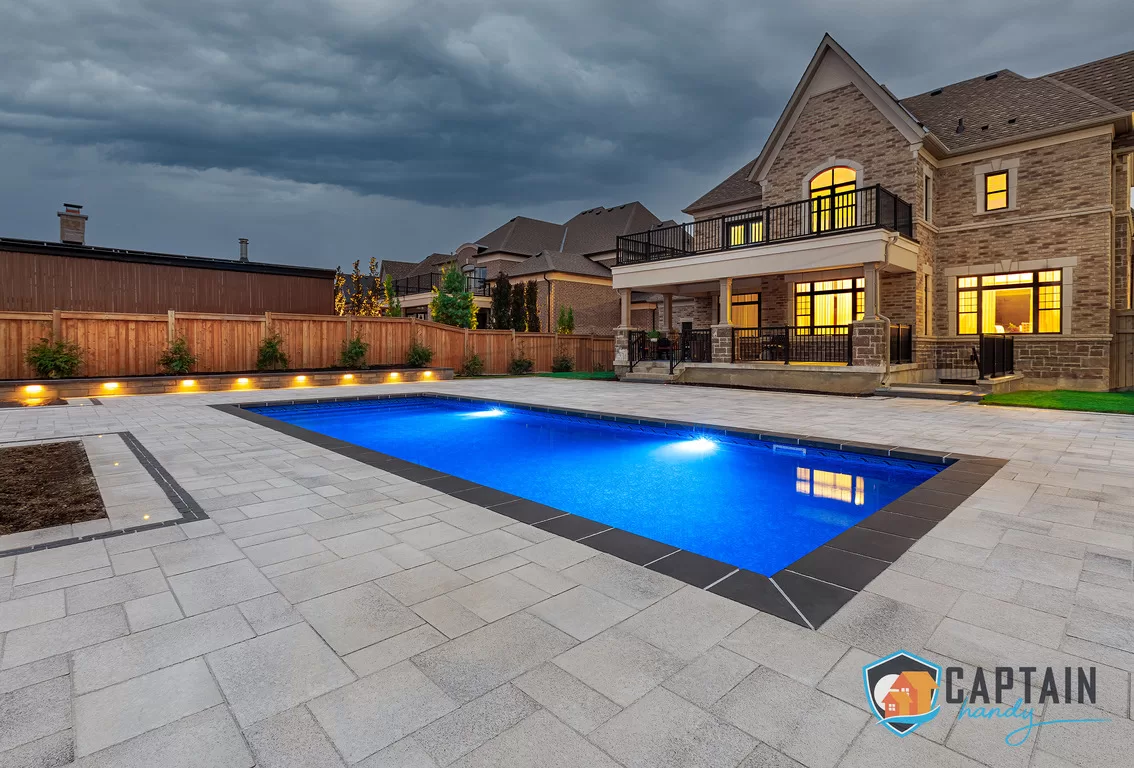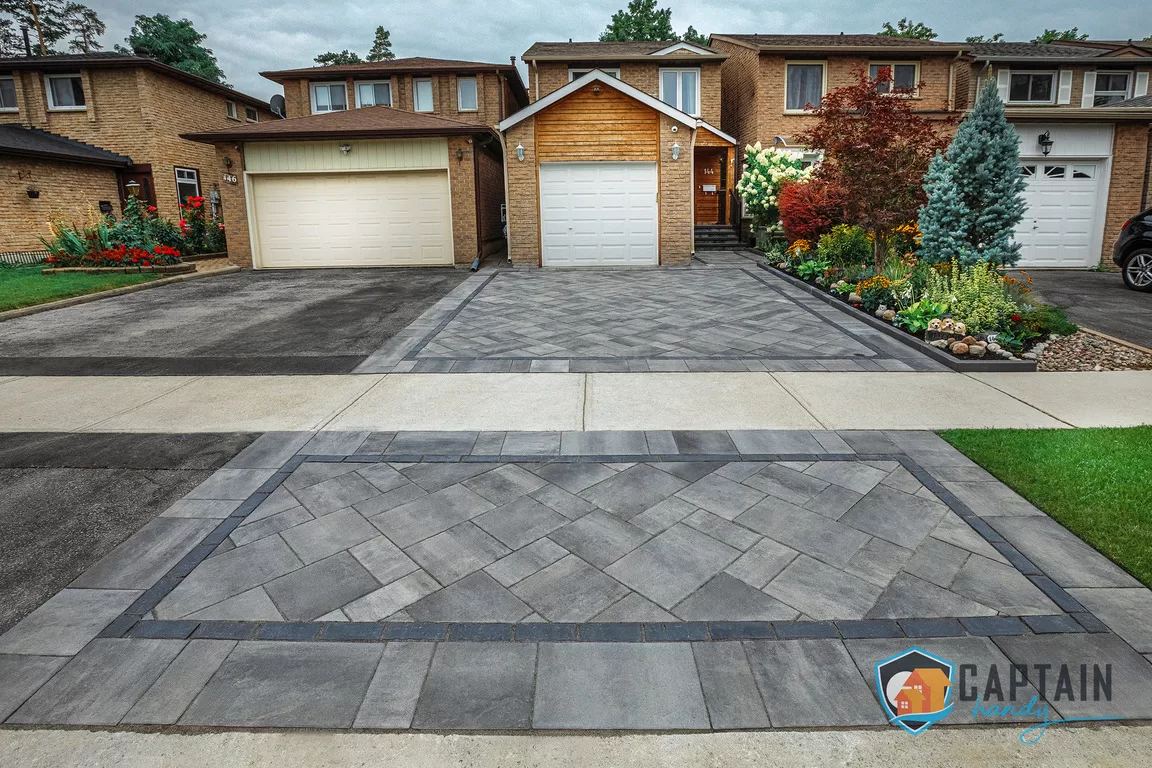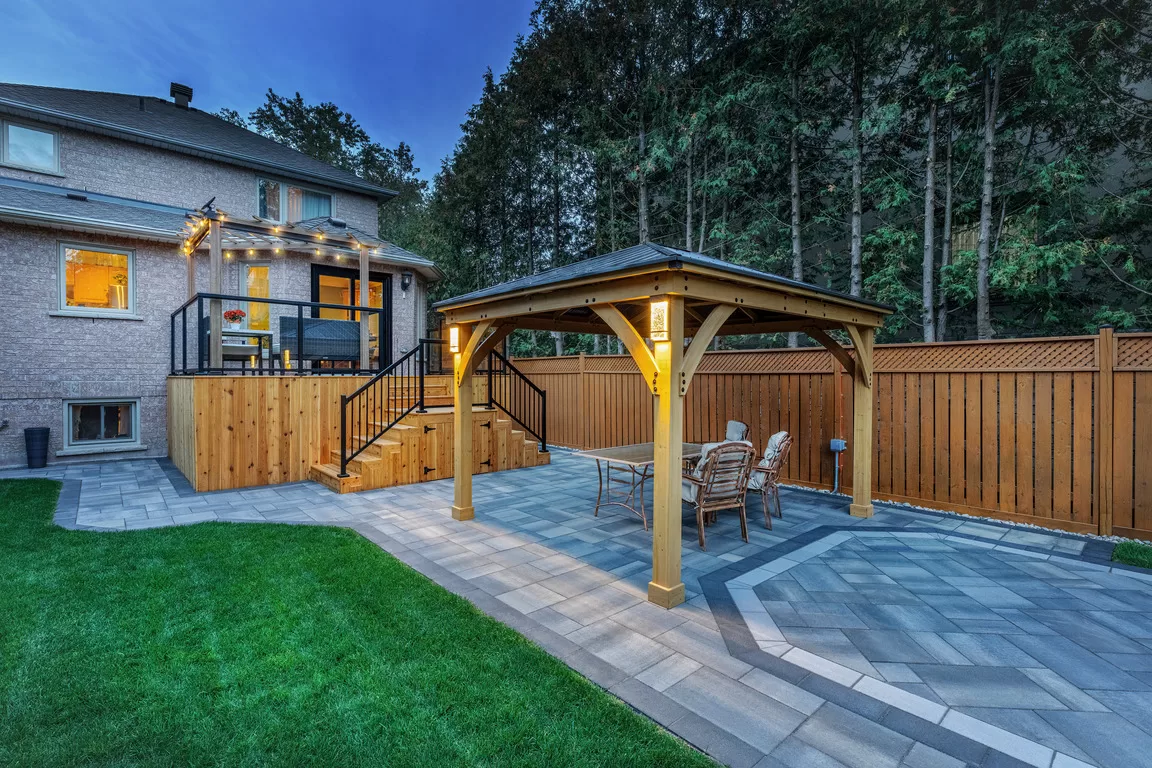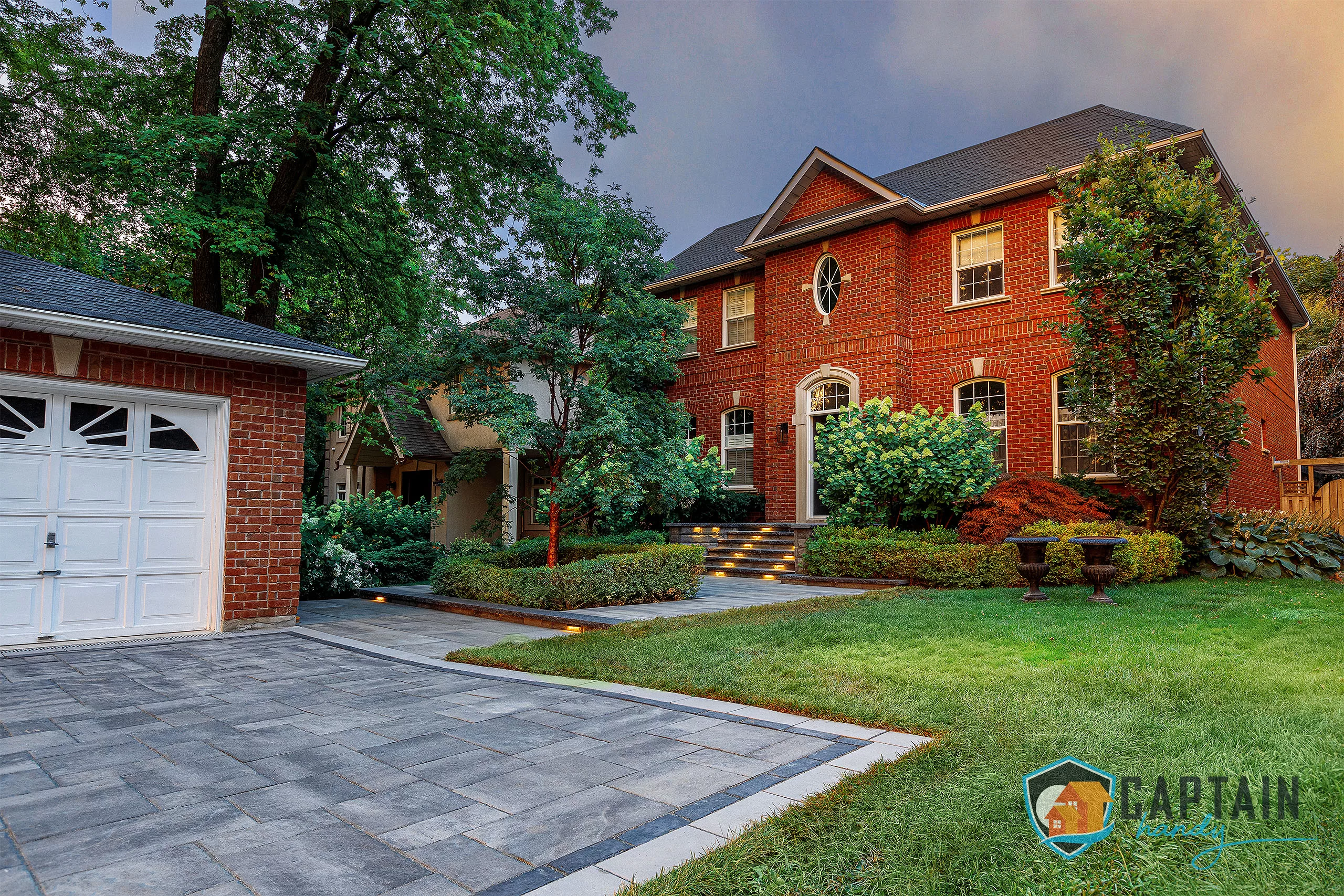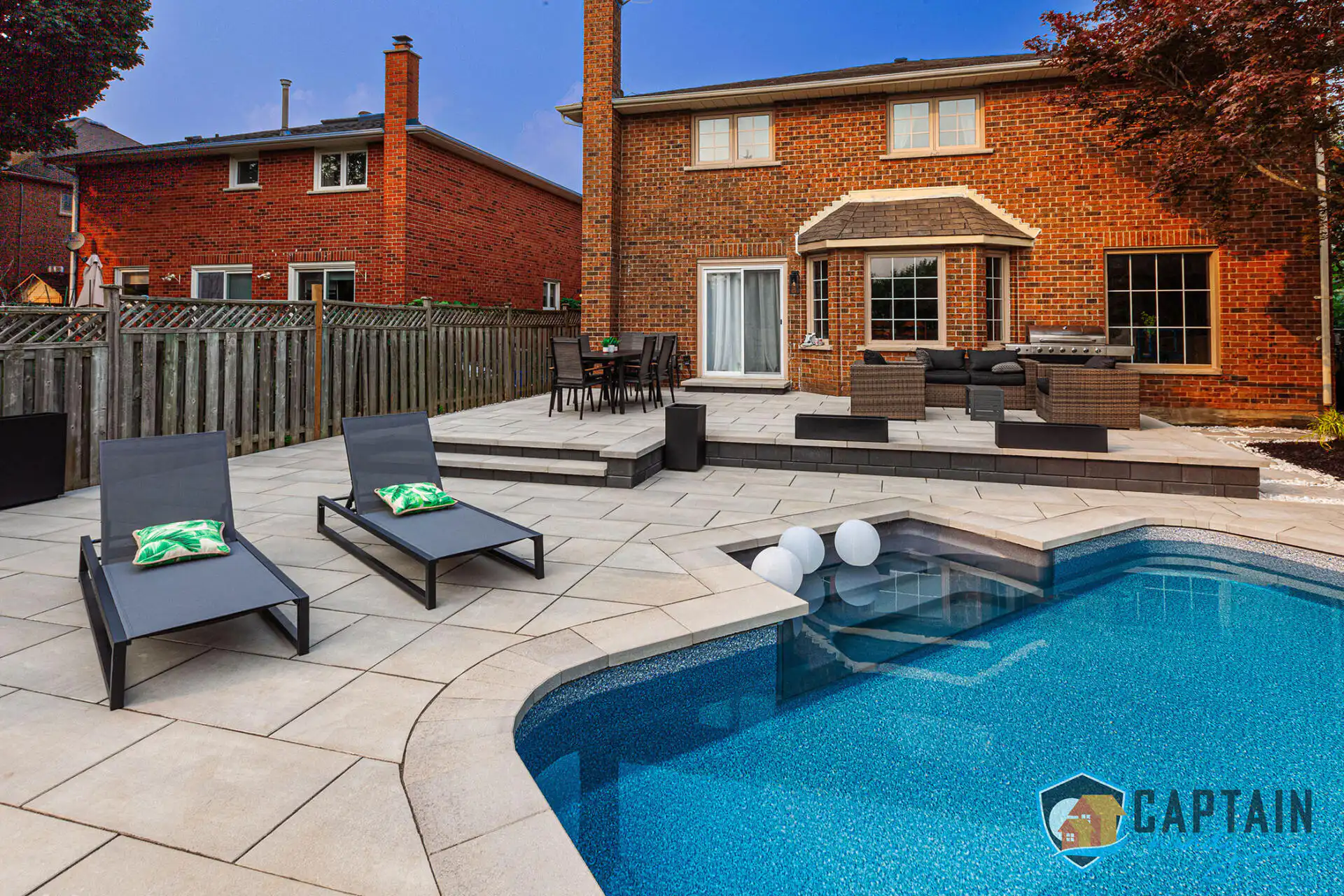





Patio building in Stouffville looks different depending on which street you’re standing on, and that’s kind of the point of this town right now. Drive through one of the newer subdivisions off Ninth Line and you’ll find fresh sod, a builder-grade concrete slab out back, and a family figuring out what to do with a bigger yard than they’ve ever had. Head a few minutes toward the older core or one of the surrounding rural properties and you’ll find mature trees, a bigger lot again, and a house that’s been added onto more than once over the decades. Whitchurch-Stouffville is a town in the middle of becoming something, part small-town, part bedroom-community, and the patios we build here have to work for both versions of it at once. We’ve built enough of them across both sides of town to know the difference matters. You can see completed work and request a free estimate at captainhandy.ca.
Search patio builders near me from most addresses in this town and you’ll get a mix of city firms who treat every job the same and small operators who’ve only ever worked one type of lot. Patio builders near me should really mean a patio contractor who’s comfortable on both a quarter-acre new-build lot and an older rural-adjacent property with mature trees, not a crew that only knows one version of Stouffville. Captain Handy’s custom patio builders handle every stage of patio installation ourselves, from the initial grading assessment through the final compaction, so patio building in Stouffville gets treated as its own project instead of a smaller copy of a Markham or Richmond Hill job.
Materials That Work Across Both Sides of Town
Because lots here range from tight new-subdivision backyards to properties with real acreage on the outskirts, material choice does a lot of heavy lifting. What works for a young family’s first backyard patio in a new build isn’t necessarily what an older rural property fifteen minutes away needs, so custom patio design here starts with a real conversation about the lot rather than a one-size template, and patio building in Stouffville rarely follows the same material plan twice.
Interlock Patios
An interlock patio is far and away the most common request we get in the newer subdivisions, and it’s often the first thing a growing family asks about once the sod has settled in. An interlock patio also gives the easiest repair path down the road, since a single settled paver can be lifted and reset without touching the rest of the surface. It handles freeze-thaw cycles well, comes in enough colour and pattern combinations to match any builder’s brick or siding package, and if a paver ever settles or cracks, we lift and reset just that section instead of tearing out the whole patio. Most interlock jobs we quote include a properly compacted gravel base and polymeric sand joints, which matters even more on newer subdivision soil that’s often been graded and backfilled rather than left undisturbed.
Paver Patios
A paver patio, using larger-format concrete or porcelain units with tighter joint lines, is the choice we see more often from homeowners chasing a cleaner, more architectural look than traditional interlock delivers. It reads well against the more modern builder facades going up across the newer parts of town, and porcelain in particular holds up against staining and fading far longer than a budget concrete unit will over a decade of Ontario summers.
Flagstone and Natural Stone Patios
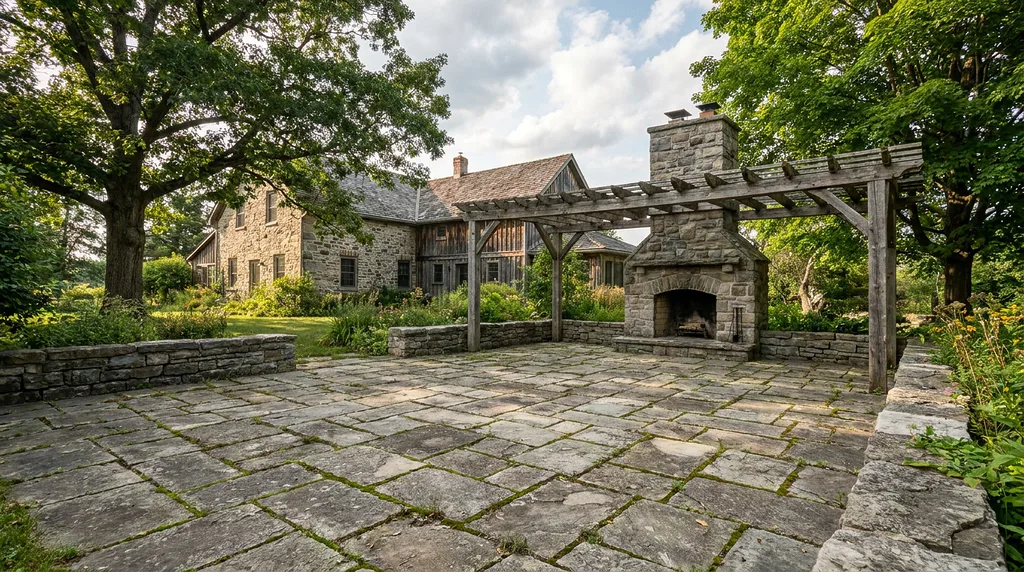
On the older, larger rural-adjacent properties, a flagstone patio or natural stone patio tends to fit the property’s character far better than anything with a manufactured, uniform edge. These lots often already have mature landscaping and a house with some age to it, so an irregular flagstone patio pieced together on site looks like it’s been part of the yard for years, not weeks. Natural stone also tends to be the material of choice around the handful of larger backyard pools we build patios for out here, since lighter stone stays cooler underfoot than dark pavers through a July afternoon. A flagstone patio on one of these bigger properties also gives us more room to vary the pattern and border than a small city yard ever would, which is part of why it stays such a popular choice out here.
Concrete and Stamped Concrete Patios
A concrete patio is still a completely legitimate option, especially for families in a newer build who want a functional space now and might add interlock borders or planting beds down the road. A stamped concrete patio finished to mimic stone or slate gives a lot of that higher-end look at a lower material cost, which makes it a common middle-ground choice for homeowners comparing patio cost across a couple of finish options before deciding.
Designing the Patio Around How a Family Actually Uses It
A backyard patio in this town usually has to do more jobs than a single downtown patio ever would, host a birthday party for twenty kids, give teenagers somewhere to hang out that isn’t the basement, and still function as a quiet adult space on a Tuesday evening. Custom patio builders who only measure square footage miss half of what actually makes a family patio work long-term, and this is exactly where patio building in Stouffville differs from a straightforward small-lot job.
Custom and 3D Patio Design
Every project starts with a custom patio design phase, and for bigger properties, that includes a 3D patio design rendering so you can see the layout, grading, and material against your actual house before anything gets ordered. On the larger lots common here, a 3D patio design also helps families visualize how a patio zone, a lawn area, and maybe a future pool would all fit together, rather than designing the patio in isolation and hoping the rest of the yard works itself out later.
Covered and Raised Patios
A covered patio stretches the usable season on both ends, and with bigger backyards out here, we often build one as a distinct outdoor room rather than a small attached lean-to. Some of that structural work pairs naturally with a pergola, which you can see examples of at captainhandy.ca/pergolas-shade-structures.html. A covered patio on a newer subdivision lot also gives shade to a yard that hasn’t had time to grow mature trees yet, which is a real factor on a lot of the streets built out here in just the last few years. On properties with any real grade change, which shows up more on the rural-adjacent lots than in the flat new subdivisions, a raised patio with a retaining wall and a proper run of patio steps solves the slope and creates a defined space at the same time.
Fire Pits, Outdoor Kitchens, and Pool Patios
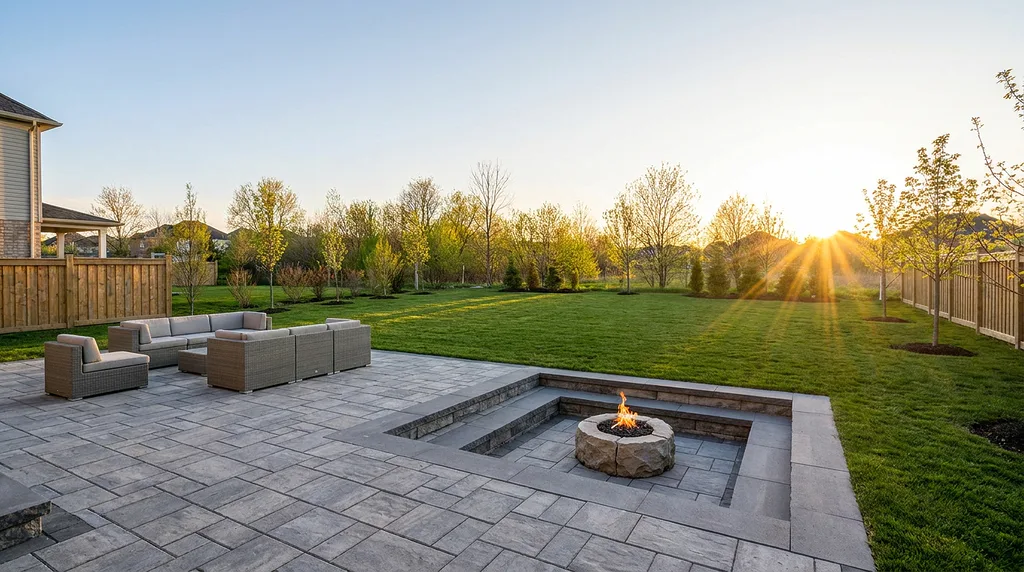
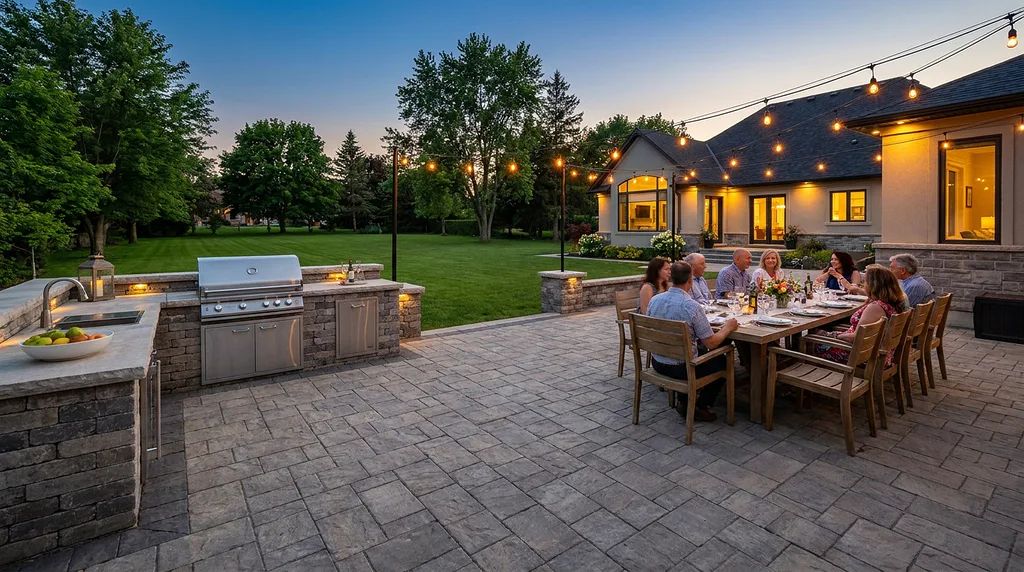
A patio with fire pit is close to a default request out here, and it’s easy to see why on a bigger lot with room to actually gather around one. Families with teenagers especially seem to gravitate toward a patio with fire pit as a way of pulling everyone outside on a weeknight instead of scattering to separate rooms. We run gas lines or build wood-burning pits depending on preference and setback rules. An outdoor kitchen patio is the natural next step for families who host often, built-in grill, prep counter, sometimes a bar fridge, planned into the layout from day one rather than squeezed in after the fact. And with more room for pools out here than you’d typically find on a city lot, a pool patio needs slip-resistant material that stays cool underfoot, which usually points us toward lighter interlock or natural stone over dark stamped concrete.
Patio Steps and Lighting
Bigger lots often mean a patio sits further from the house than a small urban yard would ever allow, so patio steps and a clear, well-lit path matter more here than people expect going in. We match steps to the primary material so they read as part of the design, not an afterthought. Patio lighting on a larger property does double duty, making the space usable after dark and helping define where the patio ends and the rest of a big backyard begins, since without it a large yard can feel like it just trails off into darkness past the door light. Low-voltage patio lighting set into steps, post caps, and planting beds solves that cheaply and keeps a big backyard feeling finished after sunset rather than half-lit.
Why This Town Builds Patios Differently
Patio contractor quotes that treat Stouffville like a suburb of Markham usually miss something important: this is still, in a lot of ways, a small town figuring out its growth spurt. New subdivisions sit on soil that’s been recently graded and compacted by a builder, which behaves differently under a patio installation than land that’s been settled for decades. We test that ground before we design anything, since a patio installation poured on freshly backfilled soil without the right base prep is the one we get called back to fix in year two. On the older, more rural-adjacent properties, the opposite issue shows up, well-established trees with root systems that can heave a poorly based patio construction project within a few seasons if we don’t route around them.
The town’s mix of housing stock means patio building in Stouffville really is two different jobs wearing one name. A patio builder who’s only ever worked flat, freshly graded suburban lots can get caught out by an older property with real slope and established landscaping, and a patio builder who’s only worked older rural lots might not think to test builder backfill before starting. Captain Handy’s custom patio builders work both sides of town regularly enough that neither situation catches us off guard, and every patio contractor on our crew has quoted enough of both lot types to know what to test for before construction starts.
Patio Renovation for Older Stouffville Properties
Not everything we do here is new construction. A lot of the older properties around town, along with some early-2000s subdivisions that are now twenty-plus years old, come to us for a patio renovation on a slab or interlock surface that’s heaved, faded, or just gone out of style. If the existing base is sound, we can often reuse it and bring the project cost down; if the base was never built to proper frost-depth standards in the first place, which is common on older DIY patios, patching over it just delays the same failure by another year or two. Every patio renovation quote tells you honestly which situation you’re in before work starts.
Permits for Patio Building in Stouffville
The Town of Whitchurch-Stouffville generally doesn’t require a patio permit for a simple at-grade patio, but that changes once you add a roof structure, a retaining wall past a certain height, or anything affecting drainage toward a neighbouring property. Newer subdivisions sometimes carry additional grading agreements tied to the builder’s original site plan, which can affect where and how a patio gets built, so it’s worth checking before ordering material. Captain Handy handles the patio permit research and application on any project where one’s required, so you’re not the one figuring out which town department to call.
What Patio Building Costs Here
Patio cost depends mainly on material and site access, and the cost to build a patio on a bigger Stouffville lot can actually come in a bit more efficient per square foot than a cramped city job, simply because there’s usually a driveway straight to the backyard rather than a narrow side gate to wheel material through. Here’s the general range we typically quote:
- Poured concrete patio: our most budget-friendly option, priced by square footage and finish
- Interlock or paver patio: a mid-range investment that moves with pattern complexity and material grade
- Stamped concrete patio: priced between plain concrete and full stone, depending on the pattern and finish
- Flagstone or natural stone patio: our premium finish, priced by stone type, thickness, and how it’s sourced
- Patio with fire pit add-on: priced separately depending on a gas line run or a wood-burning build
- Patio lighting package: priced by fixture count and how many zones you want wired
- Outdoor kitchen patio or covered patio additions: quoted individually based on scope
Because lots here tend to run larger than a typical city yard, patios often end up bigger too, 300 to 500 square feet isn’t unusual, which puts most projects solidly into the five-figure range once base prep, material, and any steps or lighting are included. The cost to build a patio at that size is a number worth budgeting for early, since a bigger footprint changes the math on which material actually fits your project. Our patio builders provide an itemized quote broken down by material and labour so there are no surprises once work starts. Call +1 (647) 830-4834 or email [email protected], or fill out the form at captainhandy.ca/contact.html and we’ll follow up with a scheduling window, usually within a day or two.
Why Stouffville Homeowners Choose Captain Handy
We’re licensed, insured, and WSIB compliant, and the crew that shows up for your site visit is the same crew that builds the project, our own in-house team, not a rotating group of subcontractors. That consistency matters on a bigger property where a project might run a couple of weeks: you get one point of contact from quote to final walkthrough, not a different foreman every few days. You can read what homeowners across the region have said about working with us on Google reviews, where hundreds of completed projects have built up strong, honest feedback.
We also build across Toronto, North York, Scarborough, Etobicoke, Vaughan, Markham, Richmond Hill, Mississauga, Brampton, Oakville, Thornhill, Aurora, Newmarket, King City, Caledon, Milton, Burlington, Pickering, Ajax, and Oshawa, but patio building in Stouffville gets its own approach: soil testing suited to both fresh subdivision fill and established rural ground, bigger footprints designed for how a growing family actually lives outside, and pricing that reflects a lot’s real size rather than a generic suburban template. If you’ve searched patio builders near me and gotten a quote that reads like it was written for a downtown lot a quarter of the size, that’s usually a sign the contractor hasn’t actually built out this way before.
Whether you’re picturing a simple backyard patio for a new-build subdivision home or a full custom patio design with a fire pit, outdoor kitchen patio, and pool patio on an older rural-adjacent property, the process starts the same way: a site visit, honest numbers, and a plan that actually fits your lot. Start at captainhandy.ca or go directly to captainhandy.ca/pergolas-shade-structures.html to see related outdoor structure work and request a free quote for your patio project.
FAQs About Patio Building in Stouffville
How much does a patio cost in Stouffville?
Patio cost depends heavily on the project – material choice, square footage, site access, and base preparation all move the number independently. Poured concrete sits at the budget end, interlock and paver patios land in the middle, and natural stone or flagstone run at the premium end. Because lots tend to run larger here than in the city, total project size, and total patio cost, is often bigger too, so Captain Handy recommends a site visit for an accurate number.
Do I need a permit to build a patio in Whitchurch-Stouffville?
A patio permit usually isn’t required for a simple ground-level patio, but adding a roof structure, a tall retaining wall, or building on a lot with an existing builder grading agreement can trigger additional review. Captain Handy checks your specific property against current town bylaws before quoting.
What’s the best patio material for a newer subdivision lot?
Interlock and paver patios tend to suit newer subdivision homes best since they match builder-grade brick and siding well and handle freshly graded soil with a proper compacted base, while flagstone and natural stone often fit older, more established properties better. The right call depends on your home’s age and your yard’s soil, which a walkthrough will tell you fast.
What’s the difference between a patio and a deck?
A patio sits at ground level and is typically built from stone, concrete, or pavers, while a deck is a raised wood or composite structure attached at door height. On larger lots with any grade change, a raised patio with steps sometimes bridges the gap between the two, and Captain Handy can walk you through which option suits your yard.
How long does patio construction take?
A standard interlock or concrete patio typically takes one to two weeks from excavation to completion, while larger projects with fire features, outdoor kitchens, or retaining walls can take three to four weeks. Bigger Stouffville lots sometimes mean bigger patios, which can add a few days to that estimate, and patio construction on a larger footprint simply needs more base material and more compaction passes before the surface goes down. Captain Handy provides a written timeline with every quote.