
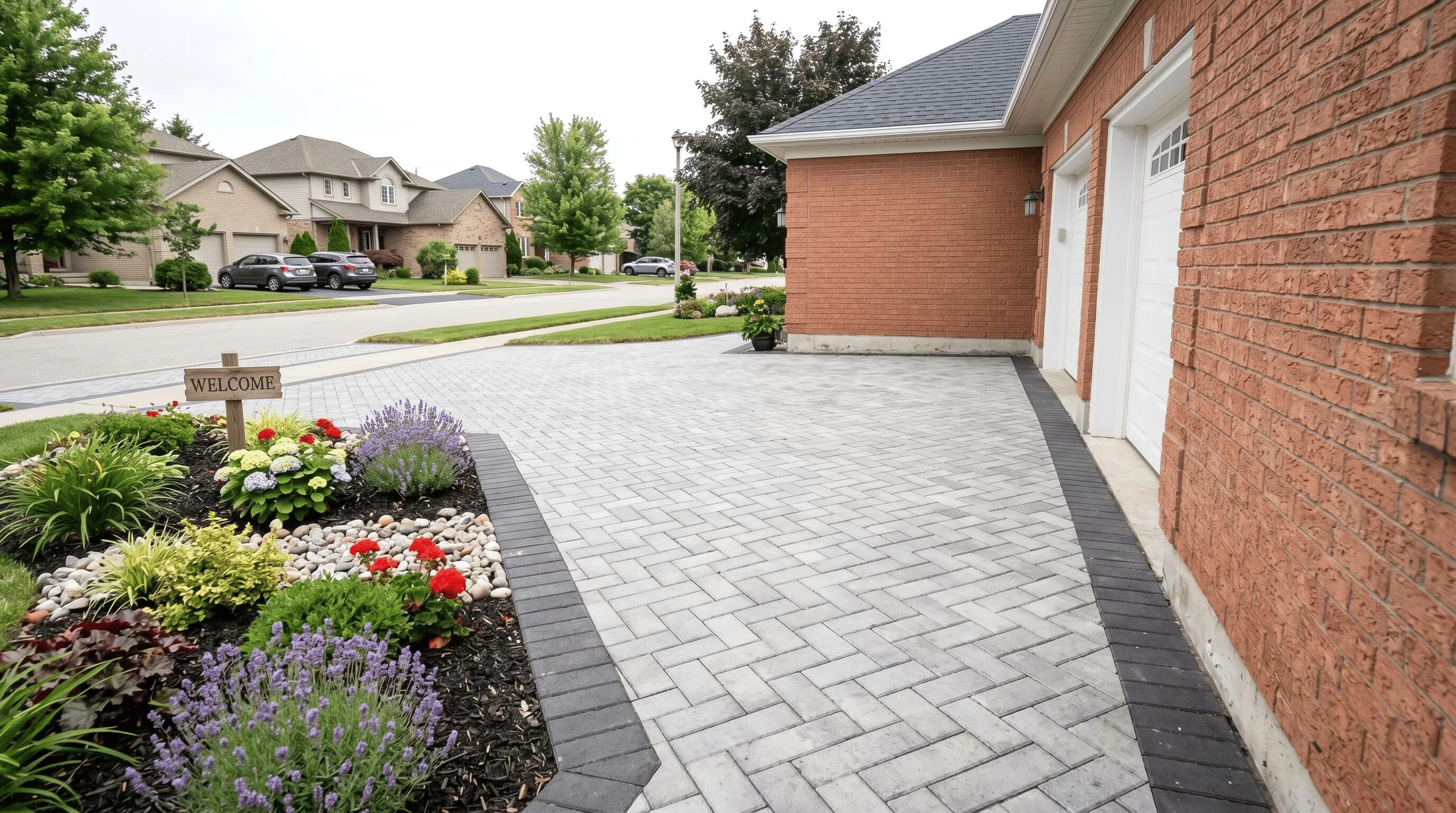
If you’ve ever pulled into a cracked, patchy parking lot and immediately formed an opinion about the business behind it, you already understand why Commercial Driveway Interlocking matters more than most property owners realize. Your driveway isn’t just a functional surface — it’s the literal first impression every client, employee, and delivery driver gets before they even step through your door. A worn-out asphalt slab whispers “we cut corners.” A beautifully laid interlocking surface says “we take pride in what we do.” And that’s exactly the message Commercial Driveway Interlocking sends, loud and clear, the moment someone turns into your lot.
So let’s talk about what this actually involves, why it’s worth the investment, and how to recognize a genuinely professional commercial driveway interlocking company when you’re ready to hire one.
Table of Contents
What Is Commercial Driveway Interlocking, Really?
At its core, Commercial Driveway Interlocking is the process of installing individual concrete or stone pavers that lock together to form a single, cohesive, load-bearing surface. Unlike poured asphalt, which forms one continuous slab that cracks under stress and is a nightmare to repair, interlocking pavers flex slightly with ground movement and temperature shifts. Think of it like chainmail versus a solid steel plate — one bends with the body, the other shatters under pressure. Some people call this same service commercial driveway paving, and honestly, both terms describe the same end goal: a durable, attractive entrance built to handle real commercial traffic.
Why Businesses Are Switching from Asphalt and Plain Concrete
Asphalt is cheap upfront, sure, but anyone who’s owned a commercial property for more than a few winters knows the story: potholes form, edges crumble, and within five to seven years you’re looking at a full resurfacing bill. Plain concrete cracks too, especially with the freeze-thaw cycles we get locally. Commercial Driveway Interlocking sidesteps both problems. When the job is handled by a genuinely professional commercial driveway paving crew, individual pavers can be lifted, repaired, and replaced without tearing up the entire driveway — which means lower long-term maintenance costs and a surface that actually looks better with age, not worse.
The Real Benefits of Commercial Driveway Interlocking for Your Property
Let’s break down why so many property managers, business owners, and developers are choosing interlocking pavers over traditional paving options.
Durability That Outlasts the Competition
Commercial properties deal with heavy traffic — delivery trucks, customer vehicles, foot traffic, shopping carts, you name it. Interlocking pavers are engineered to handle exactly this kind of punishment. When installed correctly over a properly compacted base, quality commercial driveway interlocking can last 25 to 30 years with minimal upkeep. Compare that to asphalt’s typical 10 to 15 year lifespan, and the math starts to look pretty appealing.
Curb Appeal That Turns Heads
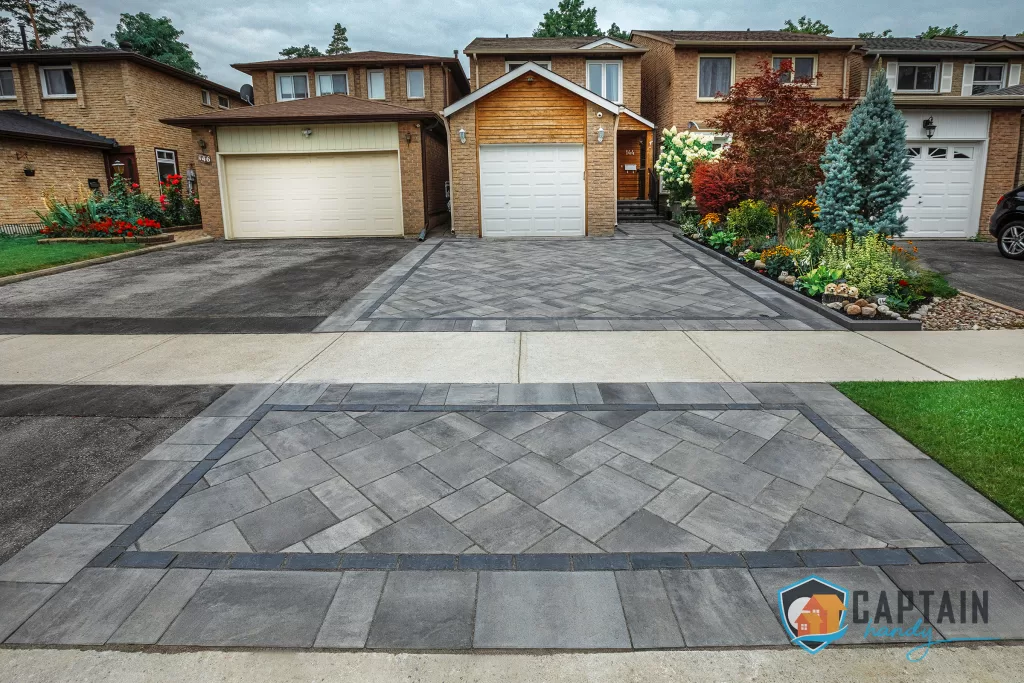
Here’s a question worth asking yourself: would you rather pull up to a plain gray slab, or a driveway with crisp geometric patterns, contrasting borders, and rich, textured stone tones? Luxury commercial driveway interlocking gives you design flexibility that asphalt simply can’t match. You can choose colors that complement your building’s brick or signage, create herringbone or basketweave patterns, and add charcoal borders that frame the entire entrance like a picture frame. For businesses that want their entrance to feel like a statement rather than an afterthought, luxury commercial driveway paving is honestly one of the highest-impact upgrades available.
Cost-Effectiveness Over Time
Yes, the upfront cost of premium commercial driveway interlocking tends to be higher than asphalt. But when you factor in the reduced need for resurfacing, the ability to spot-repair individual pavers instead of replacing entire sections, and the boost to property value and curb appeal, the long-term return on investment is hard to beat. Many commercial property owners find that even premium commercial driveway paving pays for itself within a decade simply through avoided repair costs.
How the Commercial Driveway Interlocking Process Works
A lot of people assume paving is just “lay some bricks down and call it a day.” It’s not — and the quality of the installation process is what separates a driveway that lasts decades from one that starts shifting within two years. This is exactly why the difference between a hobbyist crew and a genuinely professional commercial driveway interlocking company shows up so clearly five years down the line.
Step 1 — Site Assessment and Design
Every solid Commercial Driveway Interlocking project starts with a proper site visit. This means assessing drainage patterns, soil conditions, traffic load expectations, and how the new surface will integrate with existing landscaping, curbs, and entry points. This is also where pattern, color, and border options get discussed for clients chasing a more best commercial driveway interlocking look.
Step 2 — Excavation and Base Preparation
This is the step most people never see, and it’s arguably the most important. The existing surface gets excavated to the correct depth, and a compacted gravel base is installed — typically deeper for commercial applications than residential ones, since commercial driveways need to support heavier vehicle loads. Skipping or rushing this stage is the number one reason interlocking projects fail prematurely, which is why professional commercial driveway paving crews never cut this corner.
Step 3 — Laying the Interlocking Pavers
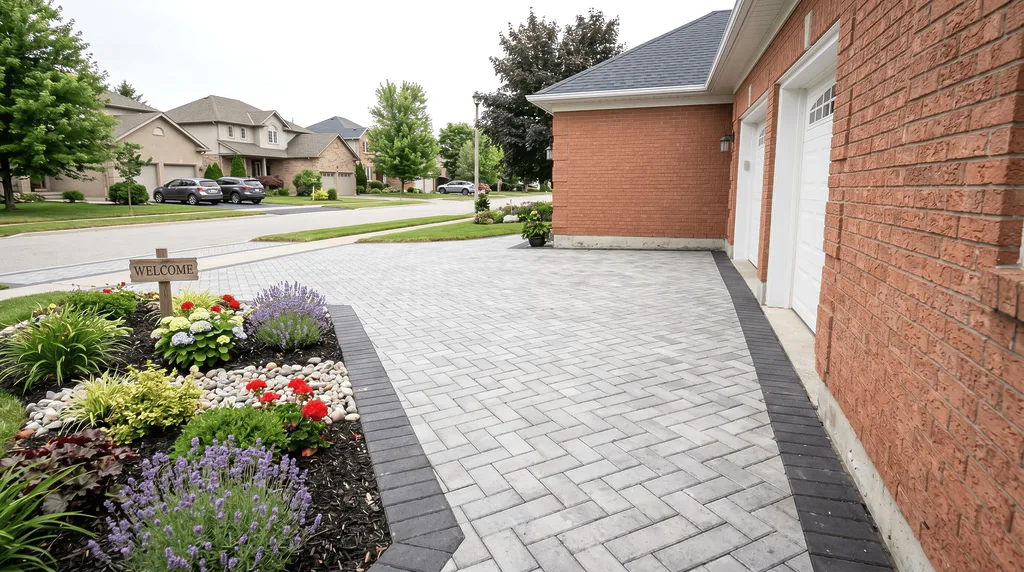
Once the base is properly compacted and leveled with bedding sand, the pavers are laid according to the chosen pattern. For commercial projects, this often means working in larger sections with precise cutting around manhole covers, drains, and curves — exactly the kind of detail work you can see in a well-executed best commercial driveway paving installation where the border tightly hugs every edge and utility access point.
Step 4 — Edge Restraints, Joint Sand, and Sealing
Edge restraints lock the entire system in place so pavers don’t shift or spread over time. Polymeric sand is then swept into the joints and activated, locking each paver to its neighbors while still allowing for water drainage and slight flexibility. Many installations finish with a sealant application, which protects against staining, oil leaks, and UV fading.
Why Each Step Matters for Longevity
Here’s the honest truth: Commercial Driveway Interlocking that fails early almost always fails because of a shortcut taken in the base preparation or edge restraint stage, not because of the pavers themselves. A driveway is only as strong as what’s underneath it — which is exactly why working with a quality commercial driveway interlocking team matters so much more than chasing the lowest quote.
Choosing the Right Pavers and Patterns for Your Commercial Driveway Interlocking Project
Popular Patterns
Herringbone patterns are a favorite for commercial driveways because the interlocking geometry distributes vehicle weight more evenly, reducing the chance of shifting under heavy traffic. Running bond and basketweave patterns offer a cleaner, more linear look that works well for modern office facades. Many businesses also opt for a contrasting border — often in a darker charcoal or graphite tone — to frame the driveway and walkways, creating the kind of polished, intentional look people associate with best commercial driveway interlocking projects rather than a flat, generic expanse of identical pavers.
Color and Material Considerations
Gray and slate tones remain the most popular choice for quality commercial driveway paving because they’re versatile, hide tire marks and minor staining well, and pair nicely with most architectural styles. That said, warmer tones like sand or charcoal blends can complement brick exteriors beautifully. The right paver thickness also matters — commercial-grade pavers are typically thicker than residential ones to handle the additional weight of trucks and heavier vehicle traffic.
Maintenance Tips to Protect Your Investment
Seasonal Care
Even though Commercial Driveway Interlocking is low-maintenance compared to asphalt, it’s not zero-maintenance. In spring, check for any settled or shifted pavers after the winter freeze-thaw cycle. In fall, clear leaves and debris from joints to prevent moisture retention. Resealing every few years helps maintain color vibrancy and stain resistance, especially in high-traffic commercial zones.
When to Call in the Professionals
If you notice pooling water, sinking sections, or widening gaps between pavers, those are signs the base has shifted and it’s time to call a professional commercial driveway interlocking company rather than attempting a DIY patch job. A quick professional fix now is always cheaper than a full re-installation later.
Finding the Right Commercial Driveway Interlocking Company
What Separates a Great Company From an Average One
Not every contractor who advertises paving services actually specializes in commercial work. A genuine commercial driveway interlocking company will walk your site personally, explain their base-depth specifications for your specific traffic load, and show you previous commercial projects — not just residential driveways. Ask about warranty terms, base depth, and whether they use polymeric sand versus regular sand, since these details separate best commercial driveway interlocking results from work that looks fine for the first year and then starts failing.
Why Captain Handy Is a Trusted Commercial Driveway Interlocking Company
At Captain Handy, Commercial Driveway Interlocking isn’t a side service we offer — it’s a craft we’ve refined over years of working with property managers, retail owners, restaurant chains, and commercial developers. We handle everything from the initial site assessment to base excavation, paver installation, and final sealing, with a team that understands commercial properties have different demands than a residential front yard. Heavier loads, tighter timelines, and zero tolerance for surfaces that fail within a few seasons — we build for all of it, and we treat every client like they deserve premium commercial driveway interlocking, not a rushed job.
If you’re looking into Commercial Driveway Interlocking in Toronto, take a look at our dedicated page for examples of recent projects and city-specific details. And don’t just take our word for it — check out our reviews directly on Google, where clients consistently highlight our attention to detail, clean job sites, and driveways that still look sharp years after installation. It’s one of the easiest ways to verify you’re hiring an honestly best commercial driveway paving team rather than just trusting a sales pitch.
Wrapping It Up
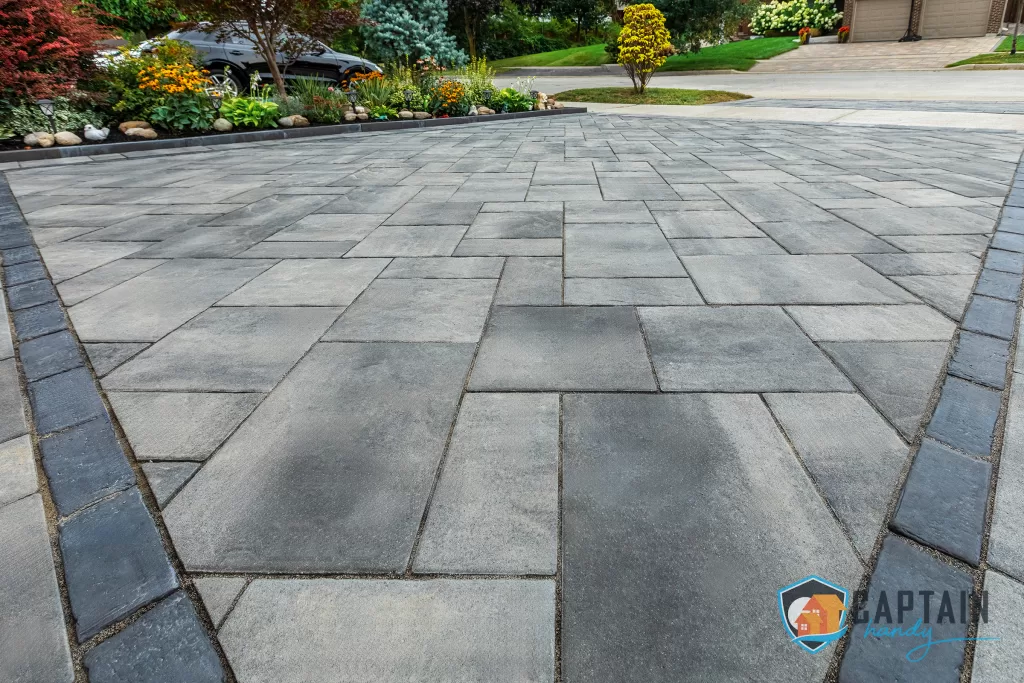
A commercial property is only as inviting as its first impression, and there’s no first impression more immediate than the driveway someone pulls into. Commercial Driveway Interlocking gives you durability that genuinely outlasts asphalt and concrete, design flexibility that elevates your property’s curb appeal, and a long-term cost advantage that pays dividends for decades. Whether you’re managing a retail plaza, a restaurant, an office complex, or an industrial facility, investing in properly installed, professional commercial driveway paving is one of the smartest exterior upgrades you can make — and hiring the right commercial driveway interlocking company from the start saves you years of headaches.
If you’re ready to talk about your Commercial Driveway Interlocking project, reach out to Captain Handy directly at +1 (647) 830-4834, email us at [email protected], or fill out the form on our contact page. We’re happy to walk through your property’s specific needs and put together a plan that fits your budget and timeline.
FAQs About Commercial Driveway Interlocking
How much does commercial driveway interlocking cost per square foot?
Pricing varies based on paver material, pattern complexity, base depth requirements, and site accessibility, but commercial projects typically run higher per square foot than residential ones due to the heavier base specifications needed to support truck and delivery traffic. Getting a property-specific quote is always the most accurate way to budget — Captain Handy offers free, no-obligation assessments for exactly this reason.
How long does interlocking paving actually last?
A properly installed interlocking driveway can last anywhere from 25 to 30 years with routine maintenance like resealing and joint sand top-ups. The biggest factor in longevity isn’t the pavers themselves, but the quality of the base preparation underneath — which is why hiring an experienced crew matters as much as the materials you choose.
Can interlocking pavers handle heavy commercial vehicle traffic?
Yes, when designed correctly. Commercial-grade interlocking installations use thicker pavers and a deeper, more heavily compacted base specifically engineered to distribute the weight of delivery trucks, forklifts, and frequent vehicle traffic without shifting or cracking over time.
Is it cheaper to repair asphalt or replace interlocking pavers when damage occurs?
Interlocking has a major advantage here — individual damaged pavers can be lifted and replaced without disturbing the surrounding surface, whereas asphalt repairs often look patchy and require resurfacing larger sections. Over the life of the driveway, this spot-repair capability tends to make interlocking more cost-effective to maintain.
What’s the best time of year to install a commercial driveway?
Late spring through early fall generally offers the best conditions for excavation, base compaction, and paver setting, since the ground isn’t frozen and there’s less risk of weather delays. That said, an experienced company can assess site conditions and schedule installation windows that minimize disruption to your business operations regardless of season.
Award-winning Landscaping Company
CONTACT US TODAY
for a Free Estimate!
Contact us and speak with one of our service professionals to schedule a visit today!
GET A FREE QUOTE